
Travel guide · France · Mont Blanc rises to 4,806 m
What to Wear in the French Alps in Winter
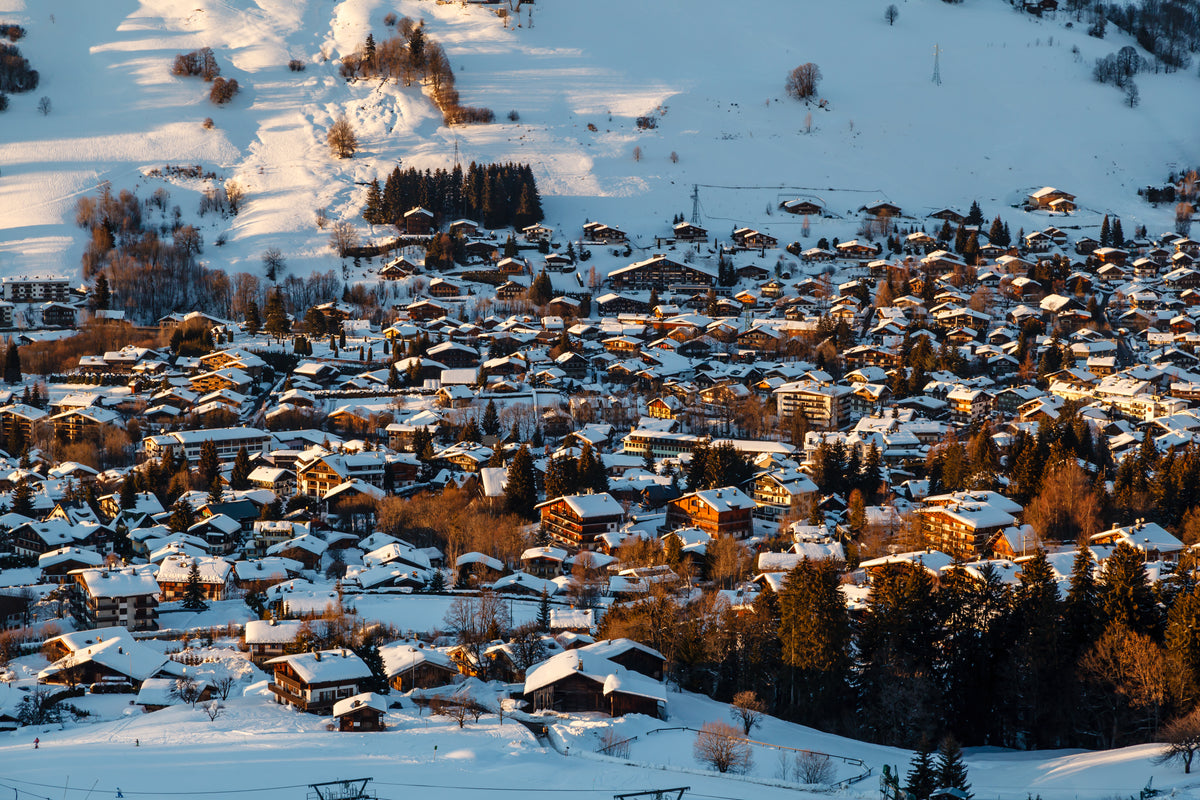
The French Alps are where Europe skis in style: the grand chalets of Courchevel, the old village of Megève, Chamonix beneath Mont Blanc. Villages sit just above freezing by day, fall to −7°C at night, and a cold spell can bring −20°C.
The short answer
Elegant in the village, warm on the mountain.
A French Alpine day moves from the slopes to a long lunch to the village at night. A merino base layer stays with you through all of it: warm on the lift, never too hot by the fire.
Month by month, Chamonix (1,035 m)
When to go, and what to pack
Average temperatures and daily hours of sunshine. Cold spells bring nights of −15°C to −20°C, and the top of the lifts is about 10°C colder.
January, place by place
From 5°C in Geneva to −17°C at the Aiguille du Midi
Average temperatures in January, the coldest month, and which Sleet weight to pack.
Air cools by roughly 6°C for every 1,000 m you climb. On the Aiguille du Midi, wind can make −17°C feel like −30°C.
Winter moments
Four French winter moments, and what to wear for them
Up to 3,842 m
A twenty-minute cable car from Chamonix to a terrace facing Mont Blanc.
Wear: 300 GSM, top and long john.
The largest linked ski area in the world
Courchevel, Méribel and Val Thorens, joined by lifts across three valleys.
Wear: 300 GSM for full ski days.
A sleigh ride in Megève
Horse-drawn sleighs through the old village as the evening lights come on.
Wear: 240 GSM under your coat.
The glacier train
A mountain railway from Chamonix to France’s largest glacier.
Wear: 300 GSM, top and long john.
Chalets and mountain restaurants are warm, and you will step in and out all day. Merino breathes, so you stay comfortable inside and warm again outside.
Which Sleet weight
Choose for the coldest place on your trip
240 GSM Midweight
Geneva · Chamonix and Megève villages · evenings out
Warm for towns and villages, light enough for long lunches, shops and evenings out.
Shop 240 GSM To −30°C300 GSM Heavyweight
Courchevel · Val d’Isère · Aiguille du Midi · ski days
For full ski days, high lifts, summits and cold spells.
Shop 300 GSM For every travellerTwin Layer & Kids
Sensitive skin · children
Twin Layer: soft cotton inside, merino outside, cut for men and for women. Kids: extra-fine merino sets.
See the collectionSkiing every day? Take 300 for the slopes and 240 for the village evenings.
How to layer
Three layers, easy to take off
- Base layerMerino against the skin, top and long john. Warm on the lift, cool enough at lunch.
- Middle layerA fine wool or cashmere jumper, or a light ski fleece. Off at the table, on again outside.
- Outer layerSki jacket and trousers for the slopes; a tailored wool coat for the village.
The French Alps dress well. A merino base layer lets you wear a slim ski suit or a tailored coat and still be warm, without bulk.
Packing list
- Merino base layer: two tops, one long john
- Fine wool or cashmere jumper
- Ski jacket and trousers, and a wool coat for the village
- Hat, neck warmer and ski gloves
- Wool socks, two or three pairs
- Boots with grip for icy streets
- Sunglasses and sun cream: the snow is bright
Questions travellers ask
How cold is Megève in winter?
In January, about 3°C by day and −6°C at night, colder on the slopes. Take 240 GSM for the village and 300 GSM for ski days.
Is Courchevel colder than Chamonix?
Usually, yes. Courchevel 1850 sits about 800 m higher, so January days stay below freezing. Choose 300 GSM.
How cold is the Aiguille du Midi?
In January, about −11°C by day and −17°C at night, with wind. Choose 300 GSM for any summit trip.
240 or 300 GSM?
240 for towns, villages and gentle days; 300 for skiing, high lifts and cold spells. If you ski every day, take one of each.
What size should I take?
See the size guide, or message us on WhatsApp and we will help you choose.
Knitted in Australia since 1982
Going to the French Alps this winter?
Tell us where you will stay and how much you will ski. We will tell you which weight and size to take.
Delivered in 1–2 days in the UAE and 3–5 days across the GCC.